
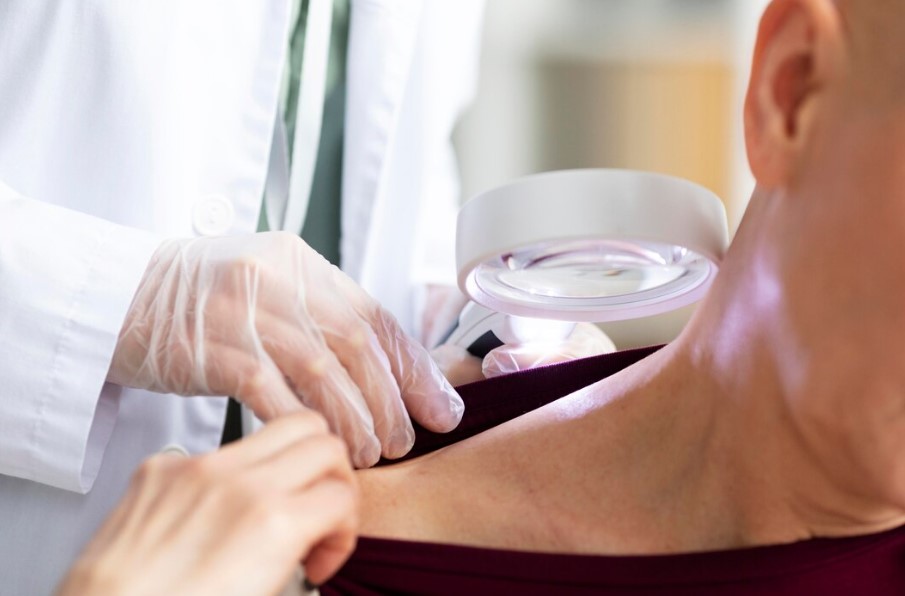
Skin Checks - detailed & comprehensive
Preventative Skin Cancer education and management
Advanced Skin Cancer Surgery in rooms under local anaesthetic
Photodynamic Therapy (PDT) - as field treatment to prevent skin cancer in sun-damaged skin
Field Treatment - with topical creams such as Fluorouracil to prevent skin cancer in sun-damaged skin
Topical Treatment of Skin Cancer - some early, superficial skin cancers can be treated without surgery
Improving the quality and appearance of sun damaged skin - exposure to the sun (specifically UV radiation) causes the skin to become thin, dry, blotchy and wrinkly. There are many treatments that I provide that improve both the quality and the appearance of your skin. These treatments include: IPL, Microneedling, anti-wrinkle injections and skin boosters
“It is estimated that 16,221 new cases of melanoma will be diagnosed in Australia in 2020.”
(Cancer Council Australia)The main types of UV rays that can affect your skin include UVA rays and UVB rays. UVB rays have more energy and are a more potent cause of at least some skin cancers, but both UVA and UVB rays can damage skin and cause skin cancer. There are no safe UV rays.
(American Cancer Society 2019)Studies have found that people who use tanning beds (or booths) have a higher risk of skin cancer, including melanoma and squamous and basal cell skin cancers. The risk of melanoma is higher if the person started indoor tanning before age 30 or 35, and the risk of basal and squamous cell skin cancer is higher if indoor tanning started before age 25.
(American Cancer Society 2019)What about vitamin D?
Whenever possible, it’s better to get vitamin D from your diet or vitamin supplements rather than from exposure to UV rays. Dietary sources and vitamin supplements do not increase skin cancer risk, and are typically more reliable ways to get the amount you need.
PDT is a type of field treatment used to kill precancerous skin cells (actinic keratoses) on the face and/or scalp that have been damaged by years of sun (UV radiation) exposure. By destroying the damaged cells, the body is able to replace these with new healthy skin cells. PDT significantly reduces the chance of developing some types of skin cancer in the treated areas, and improves the quality and feel of your skin.
Photodynamic therapy (PDT) uses a topical medication called a photosensitising agent, together with light, to kill the precancerous skin cells. The drug approved for PDT is Aminolevulinic acid (ALA). It only works after it has been activated by certain kinds of light. Over three hours the drug is absorbed by the precancerous cells. Light is then applied to the area to be treated and causes the ALA to react and form a special kind of oxygen molecule that kills the cells.
The photodynamic reaction is between the photosensitising agent, light and oxygen that kills the precancerous cells.
Benefits of PDT:
Possible side effects of PDT:
PDT vs Fluorouracil (Efudix):
The other effective field treatment for precancerous skin cells on the face & scalp is Fluorouracil (Efudix). Both PDT and Fluorouracil are equally effective for this.
Advantages of PDT:

Web Design by SBWD